
When a book stands apart, readers notice it quickly.
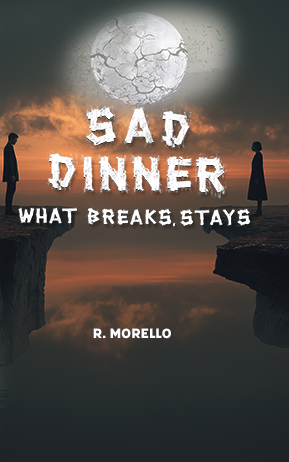
A recent review on Authors Unleashed captures exactly why Sad Dinner is resonating in a way most time-based stories don’t.
Instead of focusing on changing the past, the review points to something more introspective. It describes how the novella turns inward, exploring what it feels like to exist inside memory with full awareness. That distinction alone separates it from traditional narratives built around second chances.
One of the most striking observations from the review is its emphasis on restraint. Rather than relying on spectacle or complex mechanics, the story remains grounded, allowing emotional depth to carry the experience.
“The world remains familiar, almost deceptively so, while the emotional experience becomes increasingly layered.”
That contrast between ordinary settings and extraordinary awareness is where the story finds its weight.
The review also highlights the dynamic between Enzo and Emma as a defining strength. Their tension is not built on conflict in the usual sense, but on interpretation. Both perspectives are equally valid, creating a space that feels more real than forced narrative opposition.
“They are divided by interpretation. Both are equally grounded, equally valid…”
This is where Sad Dinner moves beyond genre expectations and into something more reflective.
Perhaps the most important takeaway from the review is how the story removes the idea of control. It does not offer a way to fix the past. Instead, it explores what it means to fully understand it.
“It removes the expectation that the past can be fixed…”
That shift transforms the premise into something quieter, but far more lasting.
Rather than being a story you simply follow, the review suggests something deeper:
“It is a story you recognize…”
And that recognition is what stays.
For the complete perspective, read the full review on Authors Unleashed:
Sad Dinner is different from the moment it begins
Learn more about Sad Dinner here:
Sad Dinner on Cathedral Rocks


